Walk into any pharmacy and you will find biotin supplements promising longer, thicker, stronger hair. Biotin is one of the most popular hair supplements in the world, but does it really work? The honest answer is: it depends on why your hair is thinning. In this guide, you will learn what biotin does, what the research says, who may benefit, and the safety points that most people do not know about.
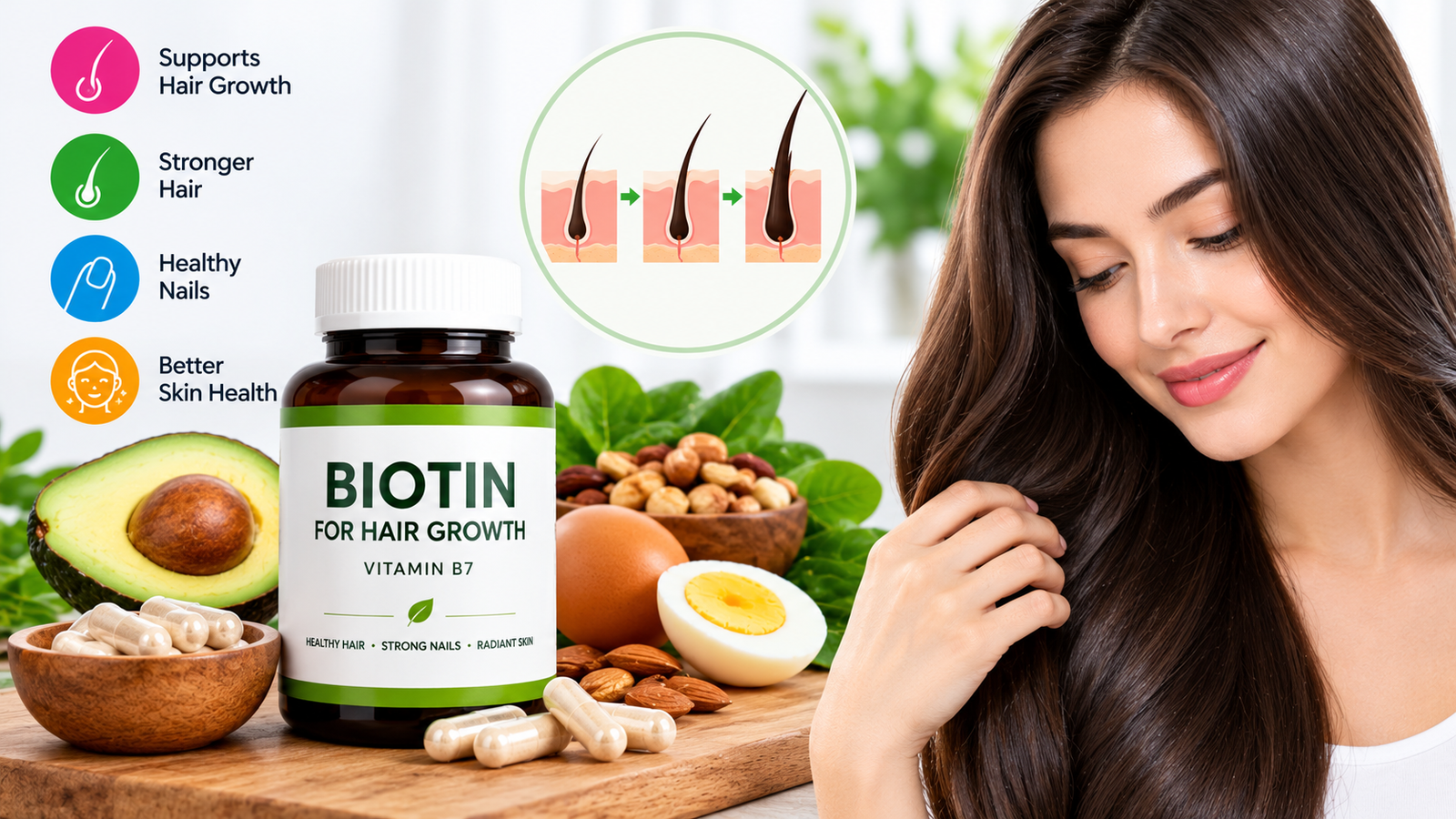
- Biotin (vitamin B7) helps the body turn food into energy and supports healthy hair, skin, and nails.
- It clearly helps hair only when you are truly deficient, which is uncommon.
- There is little strong proof that extra biotin grows hair in people with normal levels.
- High-dose biotin can interfere with some blood tests, so tell your doctor if you take it.
What Is Biotin?
Biotin, also called vitamin B7 or vitamin H, is a water-soluble B vitamin. Your body uses it to break down fats, carbohydrates, and proteins. It also plays a role in producing keratin, the main protein that makes up hair, skin, and nails. Because it is water-soluble, your body does not store much of it, so you need a regular supply from food.
Does Biotin Really Help Hair Growth?
Here is what the evidence shows:
- If you are biotin deficient: Hair thinning, a scaly red rash, and brittle nails can occur. In these cases, correcting the deficiency can improve hair and skin.
- If your biotin level is normal: Most studies are small, short, or of low quality, and there is no strong proof that extra biotin makes hair grow faster or thicker.
- Why it is so popular: Hair loss caused by biotin deficiency is real, so the idea spread widely. But deficiency is rare in people who eat a normal, varied diet.
Who May Be at Risk of Biotin Deficiency?
True deficiency is uncommon, but some groups are more likely to have low levels:
- People who regularly eat large amounts of raw egg whites (a protein in raw egg white called avidin blocks biotin)
- Pregnant or breastfeeding women
- People with long-term alcohol use
- People with certain digestive or absorption problems
- People on long-term anticonvulsant (seizure) medicines
- Rare inherited conditions, such as biotinidase deficiency
If you think you may be deficient, ask a doctor. A doctor can check the cause and decide whether a supplement is needed.
Other Common Causes of Hair Thinning
Before buying supplements, it helps to know that hair loss is often linked to something else:
| Cause | What Usually Happens |
|---|---|
| Iron deficiency | Increased shedding, tiredness, pale skin |
| Thyroid problems | Thinning across the whole scalp |
| Stress or illness | Sudden shedding a few months later (telogen effluvium) |
| Hormonal changes | After pregnancy, menopause, or with PCOS |
| Genetics | Pattern hair loss in men and women |
| Poor diet or crash dieting | Low protein and calories weaken hair |
Food Sources of Biotin
Most healthy adults get enough biotin from food. Good sources include:
- Cooked eggs (especially the yolk)
- Nuts and seeds, such as almonds and sunflower seeds
- Sweet potatoes
- Salmon and other fish
- Meat and organ meats such as liver
- Dairy products
- Legumes such as lentils, beans, and peas
- Spinach, broccoli, and avocado
Cook eggs fully. Raw egg whites contain avidin, which can reduce biotin absorption.
How Much Biotin Do You Need?
For adults, the general recommended daily intake is about 30 micrograms (mcg), which is easily met through diet. Many supplements contain far more than this, often thousands of micrograms per dose. There is no clear proof that these high amounts work better for hair. If you decide to take a supplement, read the label carefully, follow its directions, and ask a doctor or pharmacist whether it is suitable for you, especially if you are pregnant, breastfeeding, or taking other medicines.
Important Safety Warning: Biotin and Lab Tests
Biotin can interfere with some laboratory tests, including certain thyroid, hormone, and heart (troponin) tests, which may lead to false results and wrong diagnoses. Health authorities such as the US FDA have issued warnings about this.
- Always tell your doctor and the lab if you take biotin or any hair, skin, and nails supplement.
- Your doctor may advise you to stop it for a few days before blood tests. Do not stop prescribed medicines without medical advice.
Possible Side Effects
Biotin is generally considered safe at normal doses, but high-dose supplements may cause:
- Skin breakouts or acne in some people
- Mild stomach upset or nausea
- Interference with lab tests, as explained above
Stop the supplement and see a doctor if you develop a rash, swelling, or breathing problems.
Better Ways to Support Hair Health
- Eat enough protein, iron, zinc, and healthy fats.
- Be gentle with your hair. Limit tight hairstyles, heat styling, and harsh chemical treatments.
- Keep your scalp healthy. Treat problems like dandruff early.
- Manage stress and get 7 to 8 hours of sleep.
- Ask your doctor to check iron, thyroid, and vitamin levels if shedding continues.
When to See a Doctor
See a doctor or dermatologist if you notice:
- Sudden or heavy hair loss
- Patchy bald spots
- Hair loss together with fatigue, weight change, or irregular periods
- A painful, itchy, or scaly scalp
- No improvement after 3 months of good care
Frequently Asked Questions
How long does biotin take to work for hair?
If you are deficient, you may see improvement after a few months. Hair grows slowly, so any change usually takes 3 to 6 months. If your levels are normal, biotin may make no visible difference.
Can biotin cause hair loss?
Biotin itself is not known to cause hair loss. But if you are taking it and your hair is still falling, the real cause is probably something else that needs to be checked.
Can I get enough biotin from food?
Yes. Most people get enough biotin from a balanced diet that includes eggs, nuts, fish, meat, dairy, and vegetables.
Is it safe to take biotin every day?
At normal amounts it is generally considered safe for most adults. Very high doses can interfere with lab tests, so talk to a doctor before taking it regularly.
Does biotin help nails and skin too?
Some small studies suggest biotin may help brittle nails, but evidence is limited. For skin, it helps mainly when the body is low in biotin.
Conclusion
Biotin is an important vitamin, but it is not a magic hair growth pill. It helps most when you are truly deficient, and most people already get enough from food. If your hair is thinning, find the underlying cause first, such as low iron, thyroid problems, stress, or hormones. Use supplements only when needed and always tell your doctor if you take biotin before any blood test.