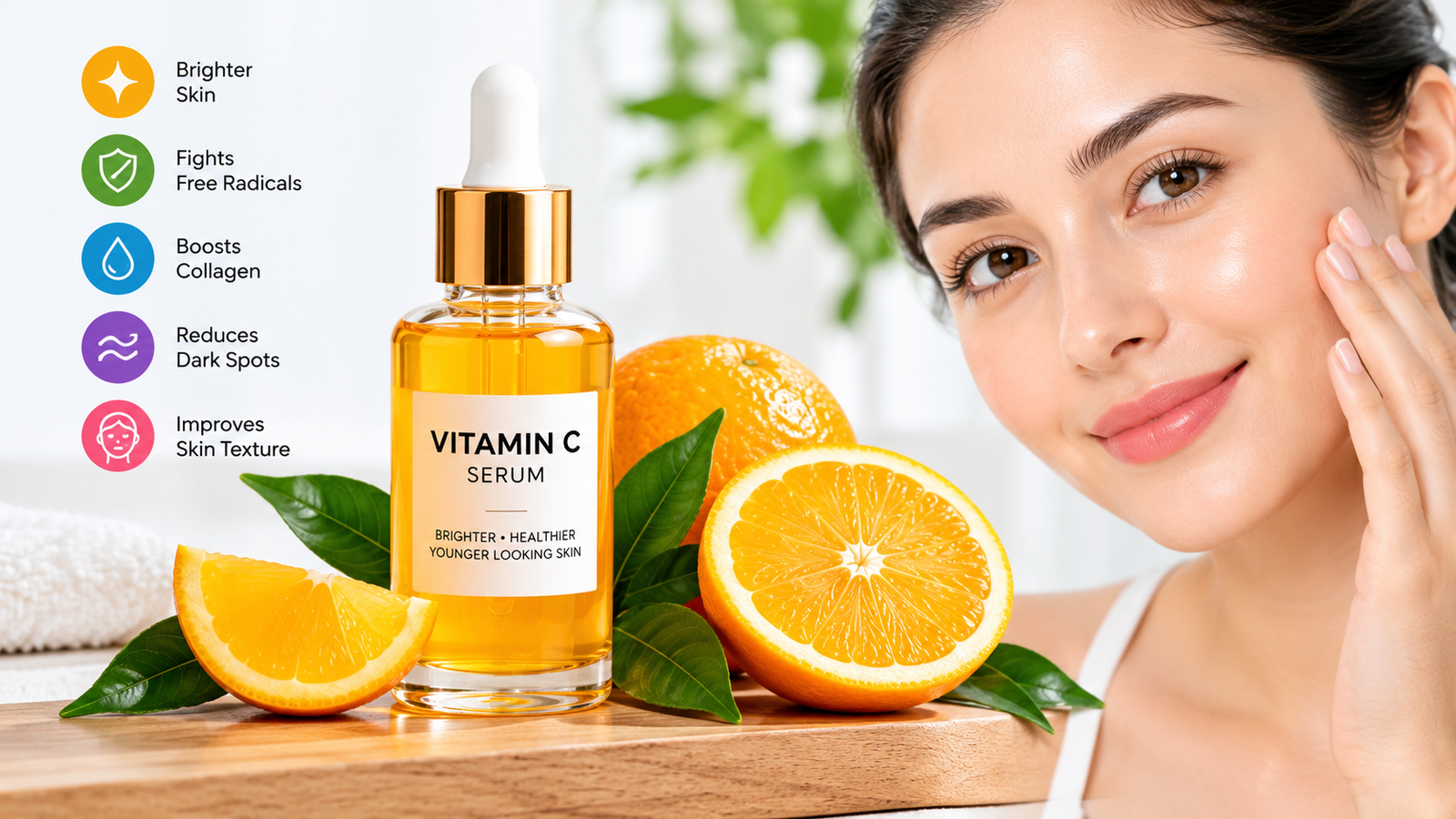
Vitamin C serum has become one of the most popular products in skincare, and for good reason. It is a powerful antioxidant that can help brighten dull skin, fade dark spots, and support collagen production. But not every vitamin C product works the same way, and using it the wrong way can cause irritation or waste your money. In this guide, you will learn the main vitamin C serum benefits, how to choose one, how to apply it, and who should be careful.
- Vitamin C is an antioxidant that helps protect skin from sun and pollution damage.
- It can brighten skin tone, fade dark spots, and support firmer-looking skin over time.
- Use it in the morning, before moisturizer and sunscreen.
- Results take about 8 to 12 weeks, and sunscreen is still essential.
What Is Vitamin C Serum?
A vitamin C serum is a lightweight skincare liquid that contains a form of vitamin C, usually L-ascorbic acid. Your body cannot make vitamin C, and eating it helps your skin from the inside. A serum delivers it directly to the skin surface, where it works as an antioxidant. Antioxidants help neutralize unstable molecules called free radicals, which are created by sunlight, pollution, and smoke and can damage skin cells.
Vitamin C Serum Benefits
1. Brightens Dull Skin
Vitamin C can interfere with the production of melanin, the pigment that gives skin its color. With regular use, this may help skin look more even and radiant.
2. Fades Dark Spots and Uneven Tone
Many people use vitamin C to lighten sun spots, post-acne marks, and mild pigmentation. Results are gradual and depend on how deep the marks are.
3. Supports Collagen Production
Vitamin C is needed by the body to make collagen, a protein that keeps skin firm and smooth. Applied to the skin, it may help reduce the look of fine lines over time.
4. Provides Antioxidant Protection
Used with sunscreen, vitamin C adds an extra layer of protection against damage from sunlight and pollution. It does not replace sunscreen.
5. May Reduce Redness and Support Healing
Vitamin C has mild calming properties and plays a role in wound healing, which can help skin recover after minor irritation or breakouts.
Types of Vitamin C in Skincare
The ingredient list matters. Here are the common forms:
| Form | Strength | Best For |
|---|---|---|
| L-ascorbic acid | Most studied and potent | Normal to oily skin; can sting on sensitive skin |
| Magnesium ascorbyl phosphate | Gentler, more stable | Sensitive skin and beginners |
| Sodium ascorbyl phosphate | Gentle, may help oily skin | Acne-prone skin |
| Ascorbyl glucoside | Gentle and stable | Sensitive skin |
How to Choose a Good Vitamin C Serum
- Concentration: Most serums contain 10% to 20% L-ascorbic acid. Beginners can start with a lower percentage (around 5% to 10%) and build up.
- Packaging: Choose a dark, airtight bottle or a pump. Vitamin C breaks down quickly when exposed to light and air.
- Formulation: Serums that also contain vitamin E or ferulic acid are often more stable and may work better together.
- Fragrance-free: This lowers the risk of irritation.
- Brand and batch: Buy from a trusted seller and check the expiry date.
How to Use Vitamin C Serum Step by Step
- Cleanse your face with a gentle cleanser and pat the skin dry.
- Patch test first. Apply a small amount behind your ear or on your jaw and wait 24 hours.
- Apply 3 to 5 drops to your face and neck. A thin layer is enough.
- Let it absorb for a minute or two.
- Moisturize to lock in hydration.
- Finish with sunscreen (SPF 30 or higher) every morning.
Morning or Night?
Morning is the most common choice because vitamin C supports protection from daytime sun and pollution. Some people use it at night too. If your skin is new to vitamin C, start with every other day and increase slowly.
What Can You Combine It With?
- Sunscreen and moisturizer: Great partners.
- Niacinamide: Generally well tolerated together.
- Retinol or strong exfoliating acids (AHA/BHA): These can irritate when used at the same time. Use them at different times, for example vitamin C in the morning and retinol at night.
Side Effects and Who Should Be Careful
- Mild stinging or tingling, especially with high concentrations
- Redness, dryness, or peeling
- Skin sensitivity if you overuse it or combine it with too many active products
Stop using the product if you develop burning, swelling, a rash, or itching. People with very sensitive skin, eczema, or rosacea should talk to a dermatologist before starting. If you are pregnant or breastfeeding, ask your doctor before adding any new active skincare product.
How to Store Vitamin C Serum
- Keep the bottle tightly closed and away from sunlight and heat.
- A cool, dark place or the refrigerator can help it last longer.
- If the serum turns dark orange or brown, or smells strange, it has oxidized. Throw it away.
- Most serums should be used within about 3 to 6 months after opening, unless the label says otherwise.
Frequently Asked Questions
How long does vitamin C serum take to work?
Most people start to see brighter skin after 4 to 6 weeks, and clearer results on dark spots after 8 to 12 weeks of daily use.
Can I use vitamin C serum every day?
Yes, most people can use it daily once their skin has adjusted. Start slowly if you have sensitive skin.
Do I still need sunscreen with vitamin C serum?
Yes. Vitamin C adds antioxidant protection but does not block UV rays the way sunscreen does.
Is vitamin C serum safe for oily or acne-prone skin?
Many people with oily skin use it well. Choose a lightweight, water-based serum and start with a low strength.
Why did my vitamin C serum turn orange?
This means the vitamin C has oxidized and is less effective. Replace it and store the new bottle away from light and air.
Conclusion
Vitamin C serum is one of the better-researched skincare ingredients. It can brighten your skin, fade dark spots, and add antioxidant protection when used every morning with sunscreen. Start slowly, choose a well-packaged product, and be patient. If your skin reacts badly or you have a skin condition, check with a dermatologist first.