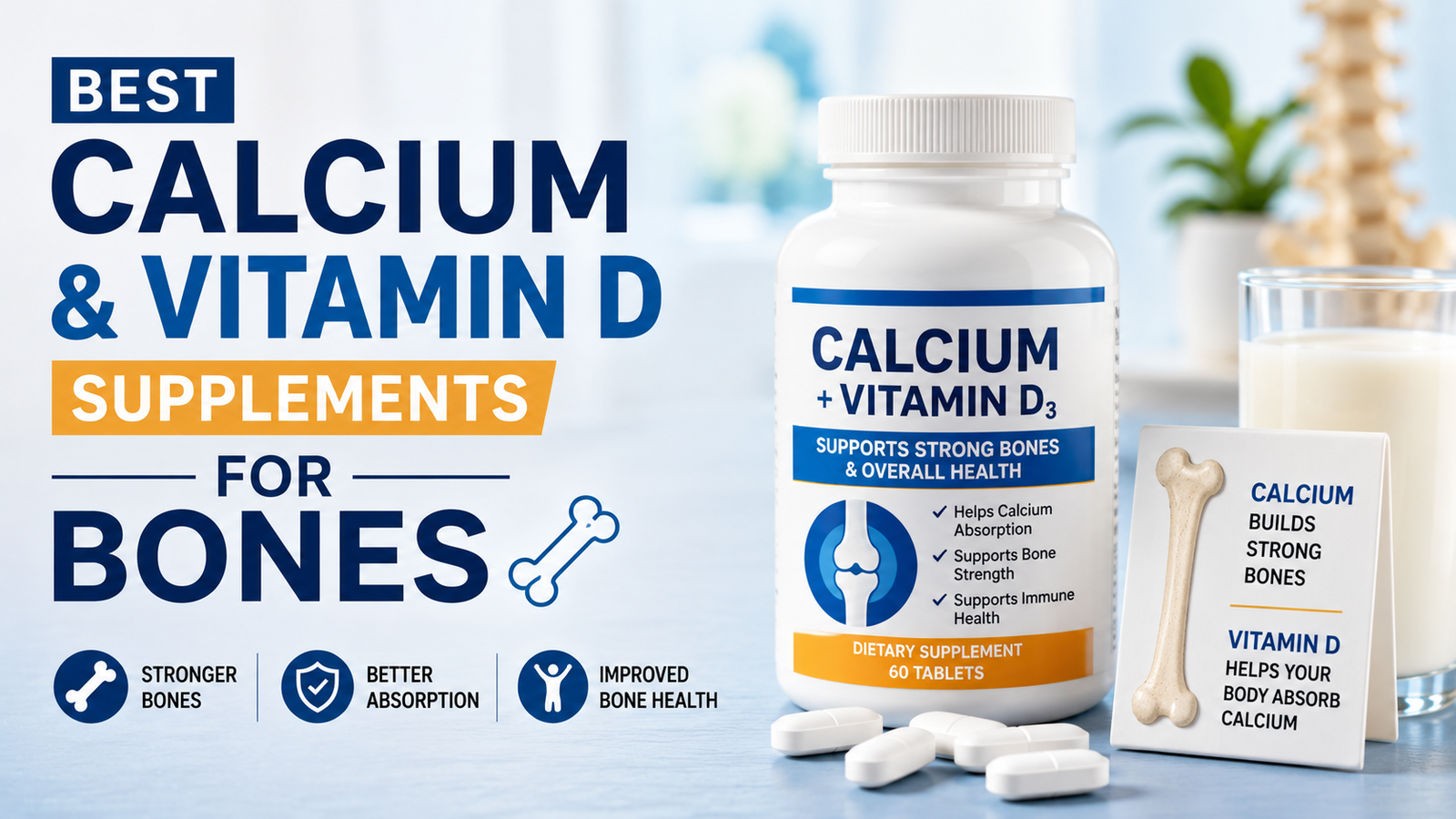
Strong bones do not happen by accident. From childhood through old age, your skeleton is constantly being broken down and rebuilt, and it needs the right raw materials to do that well. Two of the most important are calcium and vitamin D. If your diet or sun exposure falls short, a supplement can help fill the gap.
But the supplement aisle is confusing. There are dozens of forms, doses and combinations, and not every product is a good choice for every person. This guide explains how to find the best calcium and vitamin D supplements for bones by looking at the types available, the right amounts, the features that signal a quality product, and the safety points you should know before you buy.
- Why calcium and vitamin D work together
- Who may need a supplement?
- Types of calcium supplements
- Vitamin D2 vs vitamin D3
- How much do you need?
- How to choose a quality supplement
- Other nutrients that support bones
- How to take them for best absorption
- Side effects and precautions
- Frequently asked questions
Why Calcium and Vitamin D Work Together
About 99% of the calcium in your body is stored in your bones and teeth, where it gives them hardness and structure. The remaining 1% circulates in your blood and is essential for muscle contraction, nerve signals and normal heart rhythm. If you do not get enough calcium from food, your body takes it from your bones to keep those vital functions running.
Vitamin D is the partner that makes calcium useful. It helps your intestines absorb calcium from food and supplements. Without enough vitamin D, you may absorb only a small fraction of the calcium you consume, no matter how much you take. Long-term shortages of either nutrient can lead to weak bones, osteopenia and osteoporosis in adults, and rickets in children.
Who May Need a Supplement?
Many people can meet their needs through food and sensible sun exposure. A supplement is more likely to be helpful for:
- Postmenopausal women, because falling estrogen speeds up bone loss
- Older adults, whose skin makes less vitamin D and who absorb calcium less efficiently
- People who avoid dairy, including those who are lactose intolerant or follow a vegan diet
- People with limited sun exposure, such as those who cover most of their skin, work indoors, or live in northern regions
- People with darker skin, which produces vitamin D more slowly from sunlight
- Those with digestive or absorption problems, such as celiac disease, Crohn’s disease or after bariatric surgery
- Long-term users of corticosteroids or certain other medicines that affect bone
- People diagnosed with low bone density or vitamin D deficiency
Types of Calcium Supplements
The two most common forms of calcium are calcium carbonate and calcium citrate. Others, such as calcium lactate, gluconate and citrate malate, are also available. The best choice depends on your stomach, your budget and your lifestyle.
| Feature | Calcium carbonate | Calcium citrate |
|---|---|---|
| Elemental calcium | About 40% by weight (more calcium per tablet) | About 21% by weight (more tablets needed) |
| Best taken | With meals, because it needs stomach acid | With or without food |
| Good for people with low stomach acid | Less suitable | Better choice |
| Common side effects | Gas, bloating, constipation | Usually gentler on the stomach |
| Cost | Generally cheaper | Generally more expensive |
Calcium Carbonate
This is the most widely available and affordable option. It packs the most calcium into each tablet, which means fewer pills. Because it depends on stomach acid for absorption, it should be taken with food. It may cause constipation or bloating in some people.
Calcium Citrate
Calcium citrate is absorbed well whether or not you eat, which makes it a flexible option. It is often recommended for older adults, people who take acid-reducing medicines such as proton pump inhibitors, and those with certain digestive conditions. The trade-off is that each tablet contains less elemental calcium, so you may need to take more of them.
Check the “Elemental Calcium” Amount
The number that matters is elemental calcium, the actual amount of calcium available to your body. A label might say “1,250 mg calcium carbonate,” but that tablet provides only about 500 mg of elemental calcium. Always read the Supplement Facts panel to see the true amount per serving.
Vitamin D2 vs Vitamin D3
Vitamin D supplements come in two forms: D2 (ergocalciferol) and D3 (cholecalciferol). Both can raise blood levels, but studies generally show that vitamin D3 is more effective at raising and maintaining vitamin D levels. It is also the form your skin makes from sunlight.
- Vitamin D3: Usually derived from lanolin (sheep wool). Vegan versions made from lichen are also available.
- Vitamin D2: Plant-based and found in some fortified foods and prescription products.
Because vitamin D is fat-soluble, it is best absorbed when taken with a meal that contains some fat. Many combination products already include D3 alongside calcium, which is convenient and often a sensible choice.
How Much Do You Need?
Needs vary with age, sex, diet and health conditions. The figures below are commonly cited recommended daily intakes for healthy adults, and they include calcium and vitamin D from all sources, meaning food plus supplements.
| Group | Calcium per day | Vitamin D per day |
|---|---|---|
| Adults 19 to 50 | 1,000 mg | 600 IU (15 mcg) |
| Women 51 to 70 | 1,200 mg | 600 IU (15 mcg) |
| Men 51 to 70 | 1,000 mg | 600 IU (15 mcg) |
| Adults over 70 | 1,200 mg | 800 IU (20 mcg) |
Recommended upper limits for adults are about 2,000 to 2,500 mg of calcium and 4,000 IU (100 mcg) of vitamin D per day from all sources. Your doctor may prescribe higher short-term doses of vitamin D if you are deficient, but this should be done under supervision.
Count Your Food First
Before adding a high-dose calcium pill, estimate how much you already get from food. A glass of milk or a serving of yogurt provides roughly 300 mg, while fortified plant milks, cheese, sardines with bones, tofu set with calcium, almonds and leafy greens such as kale and bok choy all contribute. Many people only need a small supplement of 300 to 500 mg to close the gap, not a full 1,000 mg.
How to Choose a Quality Supplement
Supplements are not tested for effectiveness the way medicines are, and quality can vary between brands. Use this checklist when comparing products:
- Look for third-party testing. Seals from independent organizations such as USP, NSF International or ConsumerLab indicate the product contains what the label claims and has been checked for common contaminants.
- Choose the right calcium form. Carbonate with meals if you digest well, or citrate if you have low stomach acid or take acid reducers.
- Check elemental calcium per serving. Make sure the dose fits your needs and can be split into smaller servings.
- Prefer vitamin D3. A daily amount of 800 to 1,000 IU in the product is common and suitable for many adults, but match it to your own needs.
- Keep ingredients simple. Avoid products with long lists of artificial colors, unnecessary fillers or exaggerated claims such as “cures osteoporosis.”
- Pick a form you will actually use. Tablets, chewables, soft gels and liquids all exist. A supplement you can take consistently beats a perfect one you skip.
- Check allergens and diet needs. Look for gluten-free, vegan or lactose-free labels if relevant.
- Watch expiry dates and storage. Buy from reputable pharmacies or trusted retailers.
Other Nutrients That Support Bones
Calcium and vitamin D are the foundation, but several other nutrients play a supporting role:
- Magnesium: Helps convert vitamin D into its active form and is part of bone structure.
- Vitamin K (especially K2): Helps direct calcium into bone. If you take warfarin or similar blood thinners, speak to your doctor before using vitamin K supplements.
- Protein: Bone is roughly half protein by volume, so adequate intake matters.
- Phosphorus and zinc: Needed in small amounts for bone formation.
Supplements are only one part of the picture. Weight-bearing and resistance exercise such as walking, jogging, dancing and strength training, along with not smoking and limiting alcohol, are some of the most effective ways to protect your bones.
How to Take Them for Best Absorption
- Split your calcium dose. The body absorbs calcium best in amounts of about 500 mg or less at a time. If you need more, take it in two doses.
- Time carbonate with meals. Citrate is more flexible.
- Take vitamin D with a fat-containing meal. This improves absorption.
- Separate from certain medicines. Calcium can interfere with the absorption of thyroid medicine (levothyroxine), some antibiotics (such as tetracyclines and quinolones), bisphosphonates for osteoporosis and iron supplements. Ask your pharmacist how many hours to leave between them.
- Be consistent. Choose a time you can remember, such as breakfast and dinner.
Side Effects and Precautions
When taken in recommended amounts, calcium and vitamin D are safe for most people. Possible side effects include:
- Constipation, gas and bloating, especially with calcium carbonate
- Nausea or stomach upset if taken without food
- Too much vitamin D may cause high blood calcium (hypercalcemia), leading to nausea, vomiting, weakness, frequent urination and kidney problems
- Excess calcium from supplements may raise the risk of kidney stones in susceptible people
Talk to your doctor before starting supplements if you have kidney disease, kidney stones, sarcoidosis, hyperparathyroidism, heart disease or a history of high calcium levels, or if you take medicines such as thiazide diuretics, digoxin or other long-term prescriptions.
Frequently Asked Questions
Which is better, calcium carbonate or calcium citrate?
Neither is better for everyone. Carbonate is cheaper and contains more calcium but should be taken with food. Citrate is gentler and works well with or without meals, which suits older adults and people on acid-reducing medicines.
Can I get enough calcium and vitamin D without supplements?
Many people can with a balanced diet, dairy or fortified alternatives, and safe sun exposure. Vitamin D is the harder one to get from food alone, which is why deficiency is common.
What is the best time of day to take calcium and vitamin D?
Take them with a meal. Splitting calcium between breakfast and dinner works well, and vitamin D absorbs best with a meal that contains some fat.
Do calcium supplements cause kidney stones?
Calcium from food may actually lower the risk, while high-dose calcium supplements may increase it in people who are prone to stones. Stay hydrated and ask your doctor if you have a history of stones.
Can children take calcium and vitamin D supplements?
Children have different needs from adults. Use pediatric products and give them only on the advice of a pediatrician.
How long does it take to see results?
Vitamin D levels can improve within weeks to a few months. Changes in bone density happen slowly over a year or more and are measured with a bone density (DEXA) scan.
Is it safe to take calcium and vitamin D together every day?
Yes, for most healthy adults at recommended doses. The combination is commonly used and works better than calcium alone.
Final Thoughts
The best calcium and vitamin D supplement is the one that suits your body, fits your diet and is made by a trustworthy manufacturer. In most cases, that means choosing the right calcium form for your digestion, a vitamin D3 dose that matches your blood levels, and a third-party tested product with no unnecessary extras.
Remember that supplements work best alongside a calcium-rich diet, regular weight-bearing exercise and healthy habits. If you are unsure what you need, start with a conversation with your doctor and a simple vitamin D test, then build a plan that protects your bones for the long term.