Smart Inhalers with AI: Optimizing Asthma and COPD Management Digitally
The global healthcare landscape is witnessing a massive paradigm shift, driven by artificial intelligence (AI) and digital health technologies. Among the most groundbreaking advancements in respiratory care is the rise of Smart Inhalers with AI. For decades, managing chronic respiratory conditions like asthma and Chronic Obstructive Pulmonary Disease (COPD) relied heavily on patient self-reporting, subjective symptoms, and often incorrect inhaler techniques. Today, intelligent, connected devices are changing the game completely, transforming how patients breathe and how physicians treat chronic lung diseases.
By blending IoT (Internet of Things) sensors with sophisticated AI algorithms, smart inhalers provide real-time tracking, objective data insights, and personalized coaching. This comprehensive guide explores how AI-powered smart inhalers are optimizing asthma and COPD management digitally, improving medication adherence, and saving lives worldwide.
The Core Challenge in Respiratory Care
Statistics show that over 50% of asthma and COPD patients do not take their medications as prescribed. Even worse, studies reveal that up to 90% of patients demonstrate incorrect inhaler techniques, leading to suboptimal drug delivery to the lungs. AI-driven smart inhalers address these specific challenges directly.
Understanding Smart Inhalers: What Are They?
A smart inhaler, also known as a connected inhaler, is a traditional digital device equipped with advanced electronic sensors. These sensors can either be built directly into the inhaler device itself or attached as an add-on clip to an existing metered-dose inhaler (MDI) or dry powder inhaler (DPI).
These clips and built-in sensors record crucial data during each use, including:
- The exact date and time the medication was administered.
- The geographical location and environmental factors during usage.
- Inspiratory flow rates (how deeply and effectively the patient inhaled).
- The physical orientation and angle of the inhaler during activation.
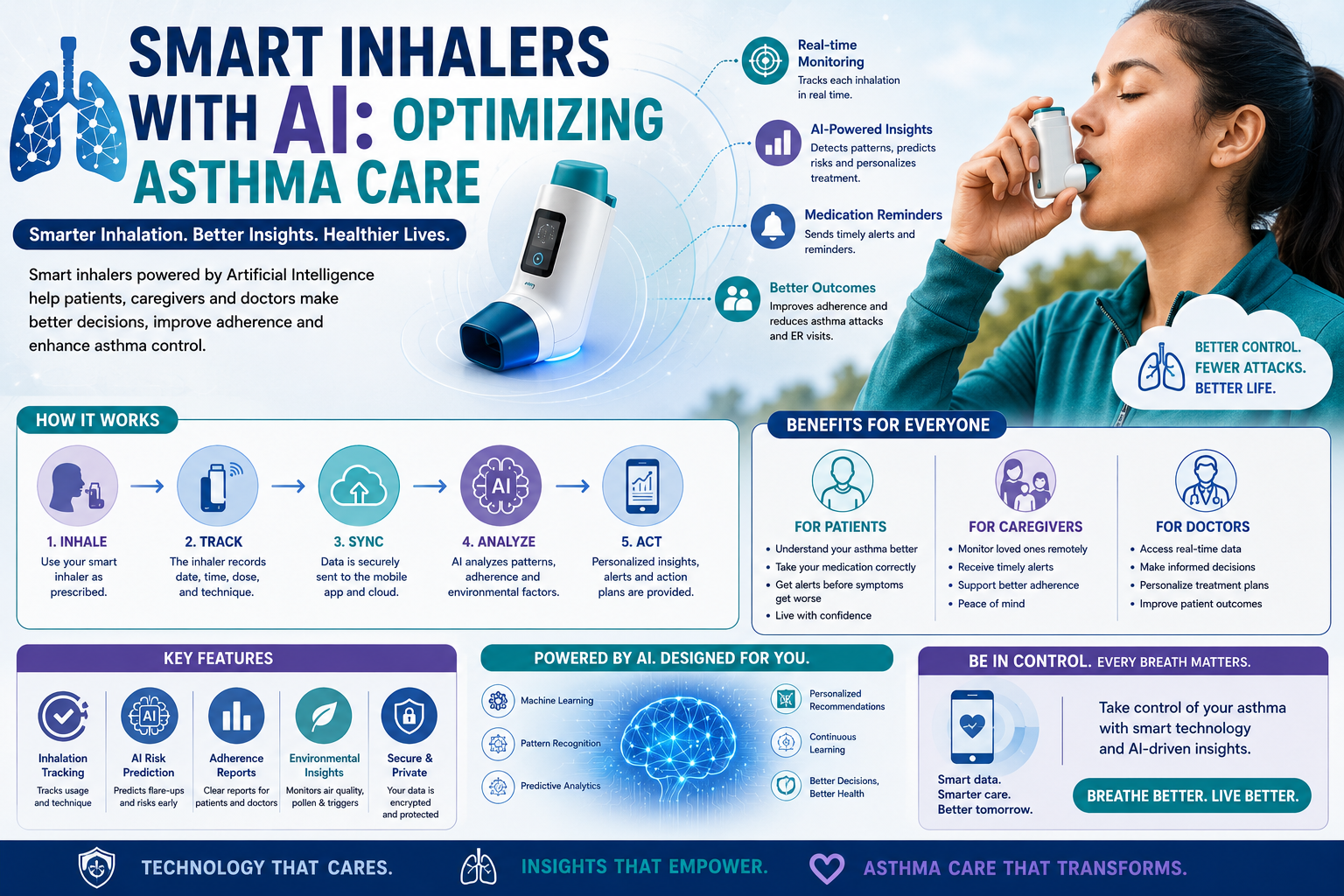
This raw data is seamlessly transmitted via Bluetooth to a smartphone application. From there, the real magic happens: AI algorithms analyze the data patterns to offer clinical insights that were previously impossible to capture outside a hospital setting.
The Role of AI in Optimizing Digital Disease Management
While basic digital inhalers simply record logs of when a button was pressed, Artificial Intelligence elevates these devices into active, preventive health assistants. Here is how AI optimizes respiratory care:
1. Predictive Analytics for Flare-Up Prevention
AI algorithms excel at detecting subtle patterns over time. By combining a patient’s historical inhaler usage data with live external environmental data—such as local pollen counts, air quality index (AQI), humidity, and temperature variations—the AI can accurately predict potential asthma attacks or COPD exacerbations before they happen. The system then sends a push notification warning the user to limit outdoor activities or carry their rescue inhaler.
2. Real-Time Inhaler Technique Assessment
Using medication improperly can render it entirely ineffective. Advanced AI models analyze the acoustic sounds of inhalation or the pressure changes within the device. If a patient breathes in too quickly, too slowly, or fails to hold their breath for the required duration, the smartphone app immediately alerts them with constructive, visual feedback on how to fix their technique next time.
3. Automated Adherence Reinforcement
Forgetfulness is human nature, but in conditions like COPD, missing controller medication can lead to emergency hospitalization. AI-powered apps learn the patient’s daily routine and deliver smart, non-intrusive reminders. If the app notices a systematic drop in adherence during weekends, it dynamically adapts its notifications to better fit the user’s lifestyle changes.
Key Benefits of AI Smart Inhalers for Patients and Doctors
- Reduced Hospital Admissions: Clinical trials show that using smart inhalers can decrease asthma-related emergency room visits by up to 50%.
- Data-Driven Consultations: Instead of relying on guesswork or memory, pulmonologists receive comprehensive digital reports showing exactly how often and how well a patient used their medication.
- Enhanced Peace of Mind: Parents of asthmatic children or caregivers of elderly COPD patients can track medication adherence remotely through cloud-synchronized dashboards.
- Optimized Step-Up/Step-Down Therapy: Doctors can safely lower medication dosages if AI data proves the patient has been stable and fully adherent over several months.
Bridging the Gap Between Patients and Pulmonologists
One of the greatest bottlenecks in modern healthcare is the lack of objective data during clinical checkups. Often, a patient suffering from frequent symptoms might simply be using their controller inhaler poorly, leading the doctor to mistakenly prescribe a stronger, more expensive steroid.
With AI smart inhalers, the entire ecosystem becomes transparent. The synchronized cloud platform acts as a bridge. Physicians can view structural charts detailing the patient’s inspiratory flow profiles, relief medication frequency, and trigger correlations. This turns standard medical checkups into hyper-personalized, highly efficient clinical sessions.
Current Market Trends and Popular Implementations
Several pharmaceutical companies and digital health pioneers are scaling up the production of these intelligent systems. Devices like Propeller Health, Teva’s Digihaler portfolio (including ProAir Digihaler), and Adherium’s Hailie platform are currently leading the global market. These devices are increasingly gaining FDA approvals and are being integrated directly into insurance reimbursement plans across developed nations, signaling a permanent shift toward digital therapeutics (DTx).
The Challenges Ahead: Privacy and Accessibility
Despite the immense advantages, the widespread adoption of AI-enabled smart inhalers faces hurdles. The first is data privacy. Because these devices track location data and personal health metrics, robust cybersecurity measures and strict adherence to regulations like HIPAA and GDPR are non-negotiable.
The second challenge is cost and accessibility. Smart inhaler tech is currently expensive compared to standard plastic inhalers. Ensuring that underserved populations and developing countries gain affordable access to these life-saving digital tools remains a vital goal for global health organizations.
Conclusion: The Future of Respiratory Care is Connected
Smart Inhalers with AI represent the future of proactive, personalized medicine. By turning a passive medical tool into an intelligent digital partner, these devices empower individuals to gain full control over their breathing. As AI models continue to evolve and sensor hardware becomes cheaper and more compact, the digital management of asthma and COPD will undoubtedly become the global standard of care, paving the way for a world where nobody has to struggle silently for their next breath.