Medical Protocol for Heatstroke: Emergency Steps and Warning Signs You Shouldn’t Ignore
As summer temperatures scale to unprecedented heights globally, public health departments face a steep rise in acute thermal injuries. Among these, heatstroke represents the absolute pinnacle of severity in the spectrum of heat-related illnesses. Unlike mild heat cramps or moderate heat exhaustion, a true medical heatstroke is a profound systemic emergency with a remarkably high mortality rate if left untreated. Recognizing the early indicators and understanding the exact clinical steps required to stabilize a patient can quite literally mean the difference between life and permanent neurological devastation or death.
For readers navigating extreme heatwaves, relying on folk remedies or generic advice during a thermal crisis is a critical error. This article outlines the scientifically verified medical protocol for identifying, managing, and treating heatstroke, offering a structured roadmap designed to save lives when every single second counts.
🚨 Medical Red Alert: True Emergency Definition
Heatstroke is clinically diagnosed when a person’s core body temperature exceeds 104°F (40°C), accompanied by profound central nervous system (CNS) abnormalities. At this juncture, the internal biological systems responsible for maintaining thermal equilibrium fail entirely. It is a critical, multi-organ threat requiring immediate intervention.
The Spectrum of Hyperthermia: Recognizing the Signs
To safely manage a patient, one must understand how the human body transitions from mild thermal stress into a catastrophic medical emergency. Hyperthermia progresses through distinct phases, and intercepting the condition early prevents the onset of full-scale cellular breakdown.
1. Heat Exhaustion: The Warning Phase
During heat exhaustion, the body is working at maximum capacity to shed excess heat. Symptoms include profuse and heavy sweating, cool and clammy skin, a rapid but weak pulse, persistent dizziness, muscle weakness, and intense nausea. The patient’s mental state remains clear, and they are fully capable of communicating. This is the final window where simple home interventions—such as moving to air conditioning and drinking fluids—can reliably reverse the condition.
2. Heatstroke: The Critical System Failure
When heat exhaustion goes unnoticed or untreated, it rapidly mutates into heatstroke. The transition is marked by a sudden, drastic shift in clinical presentations. The skin may change from damp and cool to intensely hot, flushed, and completely dry (anhidrosis). Most crucially, the central nervous system becomes compromised due to thermal swelling in the brain, manifesting as confusion, slurred speech, acute agitation, balance loss, seizures, or deep comatose states.
Heat Exhaustion vs. Heatstroke Quick Reference
To assist caregivers and emergency first-responders, this comparative table highlights the clinical indicators that separate a moderate condition from a life-threatening crisis:
| Clinical Feature | Heat Exhaustion (Moderate) | Heatstroke (Critical Emergency) |
|---|---|---|
| Core Body Temp | Usually below 104°F (40°C) | Exceeds 104°F (40°C) |
| Mental State | Normal, alert, slightly fatigued | Confused, agitated, slurred speech, comatose |
| Skin Condition | Cool, pale, moist with heavy sweat | Hot, red, completely dry or severely flushed |
| Pulse Profile | Fast and weak | Extremely rapid, strong, and bounding |
| Nervous System | Headache, mild dizziness | Seizures, hallucinations, loss of motor control |
The Step-by-Step Emergency First-Aid Protocol
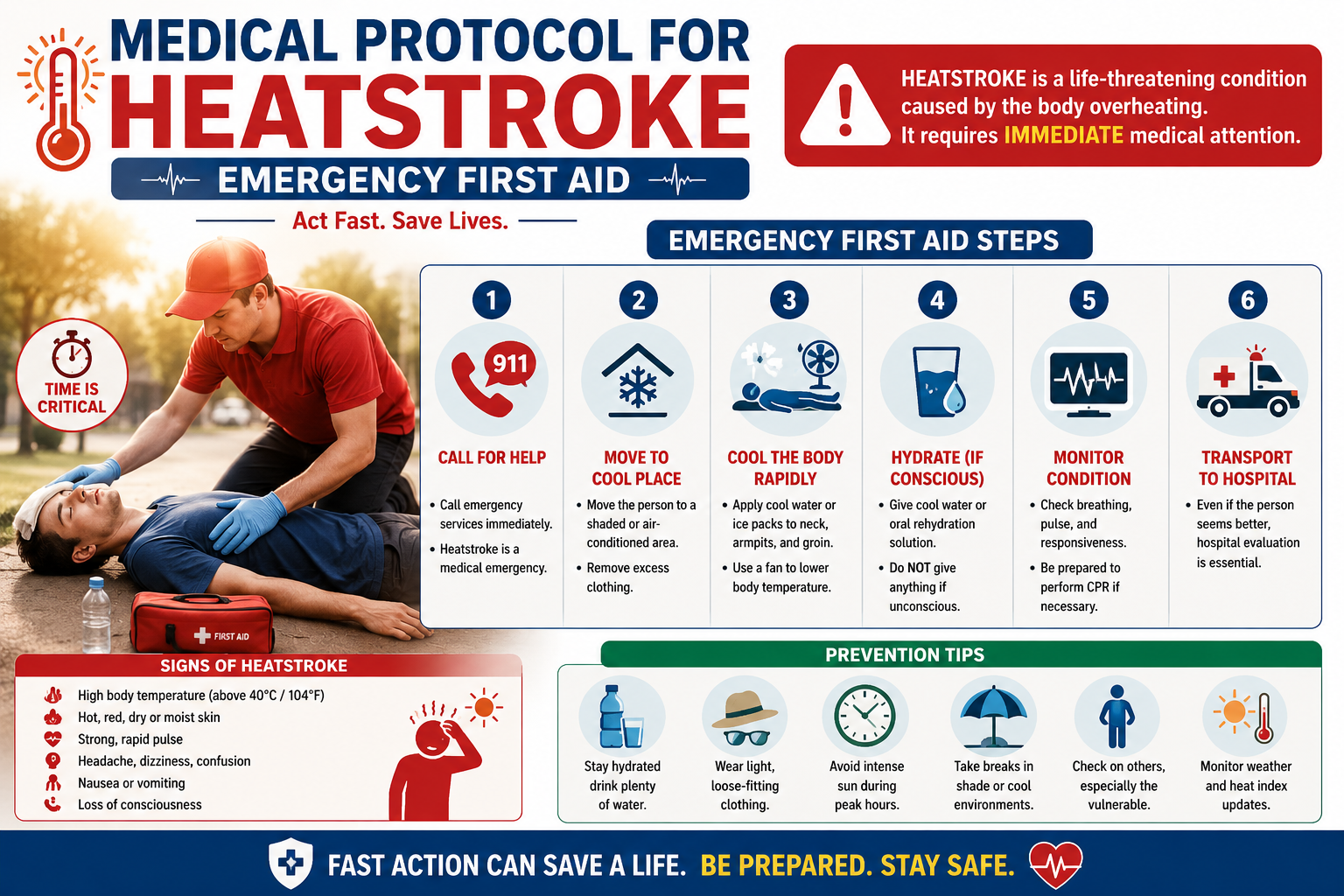
If you identify an individual displaying the definitive markers of heatstroke, you must activate emergency medical services (such as dialing 1122 or your local emergency hotline) immediately. While waiting for the professional paramedic crew to arrive, you must initiate aggressive, physical cooling protocols. Do not wait for the ambulance to begin treatment; cooling must start on-site.
Immediate Clinical Actions to Take On-Site:
- Immediate Thermal Evacuation: Instantly remove the individual from the direct path of solar radiation. Move them into an aggressively air-conditioned building or, at the very minimum, a deep, well-ventilated shaded structure.
- Optimize the Airway and Posture: Lay the patient flat on their back to facilitate systemic blood flow to the brain. If they exhibit signs of nausea or are vomiting, carefully roll them onto their side into the classic recovery position to prevent accidental airway aspiration.
- Aggressive Evaporative Cooling: Strip away all restrictive, thick, or unnecessary clothing items. Douse, spray, or sponge the patient’s entire body with cool or lukewarm water. Simultaneously, position a high-velocity electric fan directly over them. The forced airflow across the wet skin accelerates evaporation, copying the body’s natural sweat mechanisms to lower core temperatures.
- Targeted Strategic Ice Placement: Apply cold packs, ice wrapped in towels, or frozen compresses to specific vascular windows where large, high-volume blood vessels pass closest to the skin surface. These critical zones are the sides of the neck, the axillae (armpits), and the groin area. Cooling the blood passing through these channels helps lower internal organ temperatures rapidly.
- Monitor Conscious Dynamics: Continually check the patient’s breathing and responsiveness. If the patient is completely unconscious or showing signs of altered mental awareness, **do not attempt to force fluids down their throat**. This can lead to liquid entering the lungs, causing asphyxiation. Intravenous fluids must only be administered by trained medical professionals.
The Two Varieties: Classic vs. Exertional Heatstroke
Medical professionals categorize heatstroke into two separate pathophysiological pathways, each affecting different demographics:
Classic (Non-Exertional) Heatstroke
This form develops slowly over several days of sustained environmental heat exposure. It primarily impacts vulnerable demographics who lack the physical mobility or resources to escape hot environments. This includes the elderly, individuals with chronic cardiovascular diseases, infants, and patients taking specific neurological or diuretic medications that blunt natural thermoregulation.
Exertional Heatstroke
This variant is sudden and directly tied to intense physical activity in high thermal conditions. It typically strikes young, otherwise completely healthy individuals—such as outdoor construction laborers, agricultural workers, military personnel, and athletes. In these cases, the sheer volume of metabolic heat generated by working muscles completely overwhelms an otherwise normal sweating system.
What Happens in the Hospital? Advanced Clinical Management
Once the patient is safely transferred into an emergency department, physicians implement sophisticated internal cooling and monitoring strategies. This includes continuous core temperature monitoring via esophageal or rectal probes to prevent overcooling (hypothermia).
Medical teams administer chilled intravenous saline solutions, monitor blood chemistry closely to correct dangerous electrolyte imbalances, and watch for signs of Rhabdomyolysis—a severe condition where damaged muscle tissue breaks down and floods the bloodstream, threatening acute kidney failure. Medications like antipyretics (e.g., paracetamol or aspirin) are entirely ineffective here because heatstroke is caused by environmental and metabolic overload, not an infection-driven fever.
Conclusion: Vigilance is the Best Medicine
Heatstroke is an absolute clinical emergency, but it is also almost entirely preventable. By maintaining a sharp eye out for early warning flags like confusion, extreme flushing, and a bounding pulse during heatwaves, communities can stop thermal injury before it turns fatal. Memorizing the protocol of shade, water evaporation, and strategic ice placement arms you with the tools needed to protect lives during our planet’s increasingly harsh summer months.